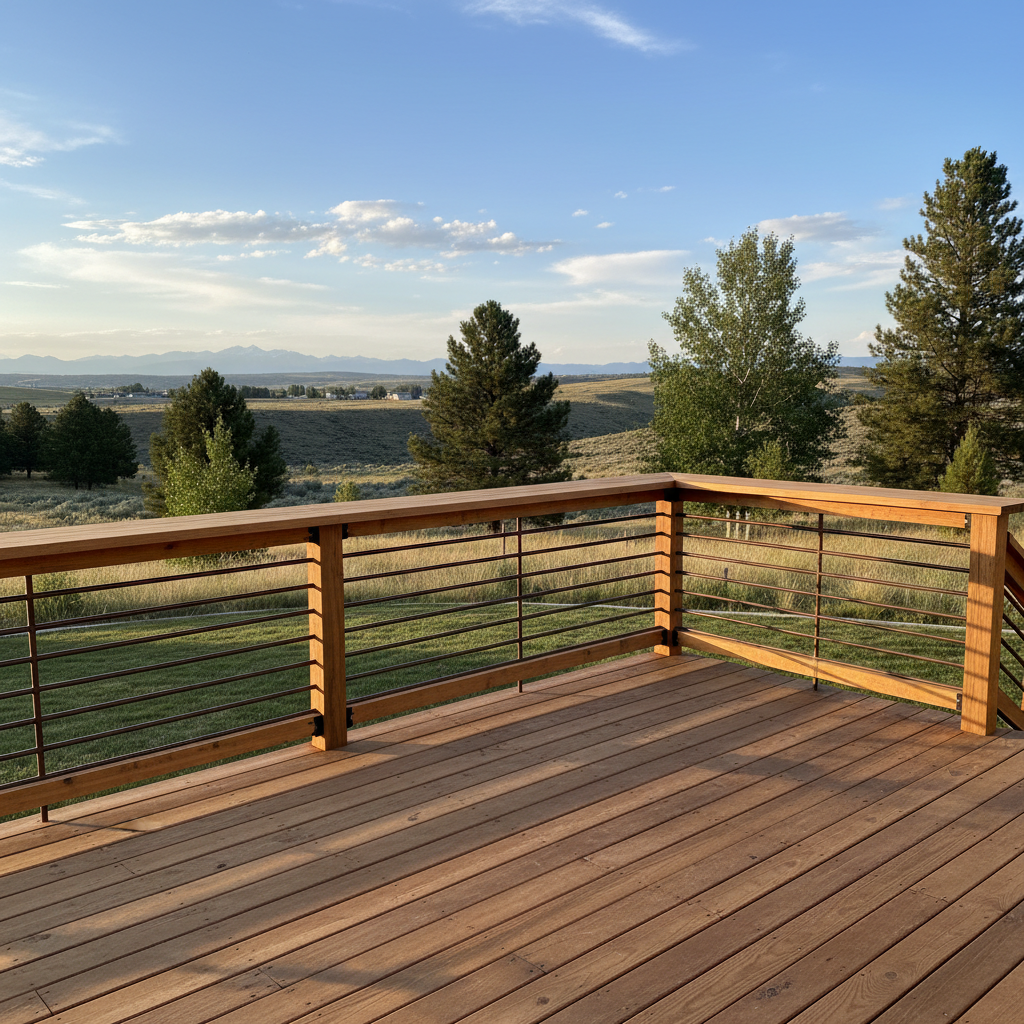
You just invested in a beautiful new deck railing system, maybe from us at Eagle Deck Creations, or perhaps you've had one for a while. Either way, you want it to last. That's smart. Good railings aren't just about looks; they're about safety, and keeping them in top shape isn't as hard as you might think. It just takes a little know-how and some regular attention.
Extending the Life of Your Deck Railings
The biggest thing you can do to extend the life of your railings, regardless of material, is to keep them clean. Dirt, grime, pollen, and even bird droppings aren't just unsightly; they can hold moisture against the material, leading to corrosion on metal, mildew on composites, and rot on wood. A simple wash down a couple of times a year goes a long way.
- Wood Railings: If you've got cedar or pressure-treated wood, you'll want to re-seal or re-stain them every few years. Our dry summers here in Eagle can really bake the finish off, and then the winter snow and spring rains soak right into the unprotected wood. That's a recipe for warping, cracking, and rot. Keep an eye on the finish; if it's looking dull or water isn't beading up anymore, it's time to reapply.
- Composite Railings: These are pretty low-maintenance, which is why a lot of folks choose them. A good scrub with mild soap and water is usually all they need. Just avoid abrasive cleaners or harsh chemicals, as they can dull the finish or even damage the material.
- Metal Railings (Aluminum, Steel): Aluminum is fantastic because it doesn't rust. A good wash is usually sufficient. For steel, especially if it's not powder-coated, you need to watch for rust spots. If you see any, address them quickly by sanding, priming, and repainting to prevent it from spreading.
- Cable Railings: The cables themselves are usually stainless steel, so they're pretty tough. Keep them clean with a mild soap and water solution. The main thing here is to check the tension periodically. Cables can stretch a tiny bit over time, especially with temperature changes, and you don't want them getting too loose.
Regular Maintenance: What to Look For
I tell all my clients that a quick visual inspection is your best friend. Do this at least once a season, maybe when you're doing your spring yard work or before winter hits. It only takes a few minutes.
- Fasteners and Connections: This is huge. Are all the screws tight? Are the posts wobbly? Our freeze-thaw cycles in Idaho can put a lot of stress on connections. Wood expands and contracts, and fasteners can loosen. Grab each post and give it a good shake. If there's any give, tighten things up. For metal railings, check welds and bolts.
- Splitting, Cracking, or Rot (Wood): Look closely at all wood components. Any signs of soft spots, dark discoloration, or significant cracking? Pay extra attention to the bottom of posts where they meet the deck surface, as this is where moisture tends to sit.
- Corrosion or Rust (Metal): Any bubbling paint, reddish-brown stains, or actual flaking metal? These are red flags.
- Mold or Mildew: Black or green fuzzy spots, especially in shaded areas. Clean these off promptly, as they can degrade materials over time and look terrible.
- Loose Balusters or Spindles: Give each one a wiggle. If they're loose, they're not doing their job of keeping people safe.
- Cable Tension: For cable railings, make sure the cables are still taut. You shouldn't be able to push them down significantly in the middle.
When to Call a Professional
Look, I'm a contractor, and I'm happy to help, but I also believe in empowering homeowners to do what they can. However, there are definitely times when you need to bring in someone with experience. Don't try to DIY something that impacts safety if you're not confident.
- Significant Structural Issues: If a main support post is rotted through, or a large section of your railing is severely wobbly and tightening a few screws isn't fixing it, that's a professional job. This isn't just about aesthetics; it's a safety hazard.
- Extensive Rot or Pest Damage: If you find widespread rot in multiple places or signs of carpenter ants or termites, you're dealing with a bigger problem than just a loose board. That requires a professional assessment and repair.
- Major Corrosion: If your metal railings are severely rusted or corroded beyond just a few surface spots, especially at connection points, it might compromise the integrity.
- After a Major Storm: If we get one of those crazy windstorms or a heavy snow load causes damage, it's wise to have a pro check things out, even if you don't see obvious problems. Hidden damage can be dangerous.
- You're Unsure: Honestly, if you're ever looking at something on your railing and thinking,